GolfBays

GOLF BAYS BLOGS

Product deep-dives, enclosure & simulator advice, and much more…

SHOWING 64 TO 72 OF 86 RECORDS

Artificial Turf

October 20, 2022

By Robert Hart

Must Have Golf Simulator Accessories

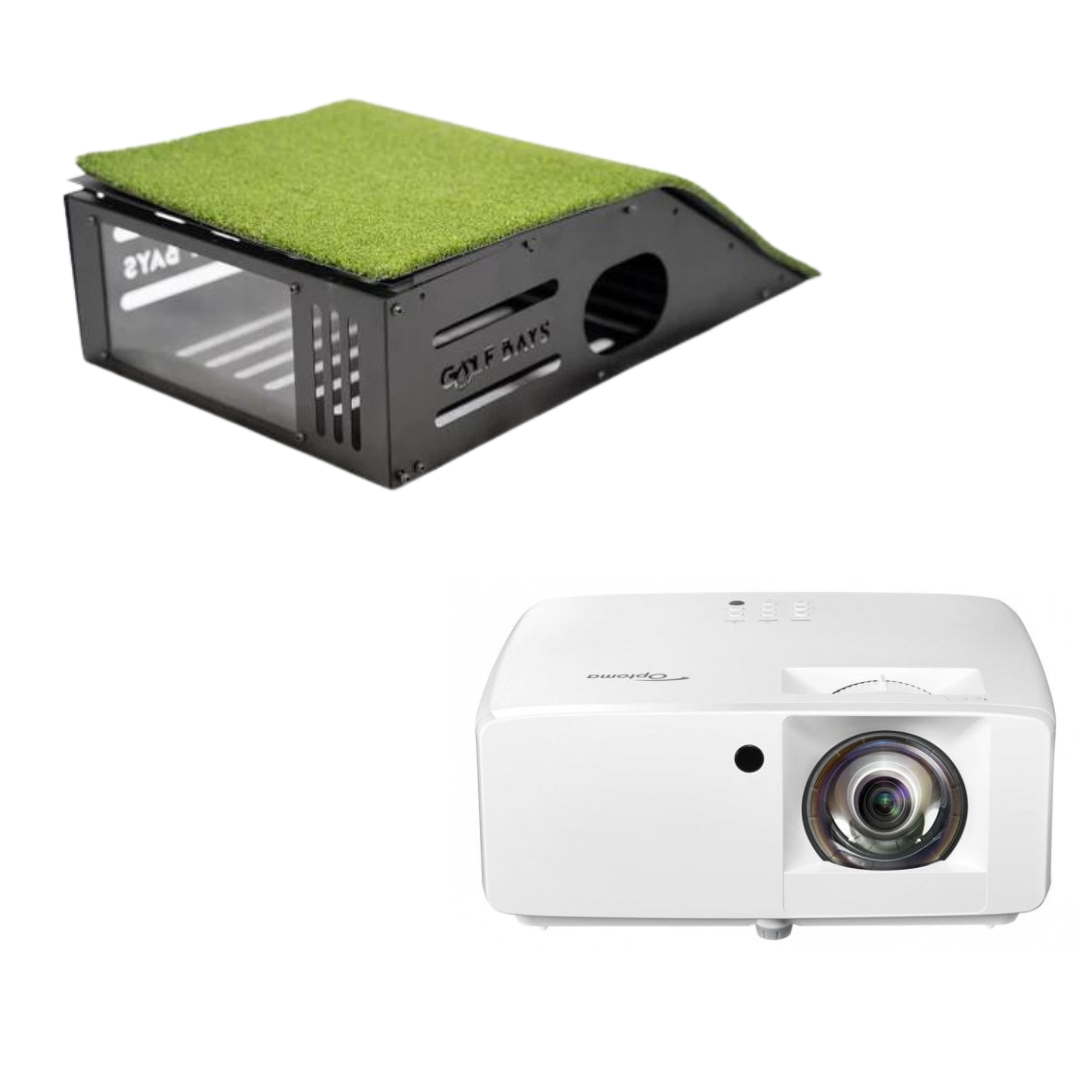
Must Have Golf Simulator Accessories   Some people have top of the line golf simulator setups. These can be in their house, basement, or garage and have the best systems, screens, and software. There always is a way to upgrade your setup though. For those looking for the next best thing to add to their golf simulator setup, you should want to check out these items below. These all can add to the experience of your golf simulator for you and your friends.   Artificial Turf Most of the golf simulators won’t come with a full artificial grass to hit off of and have as the path up from the launch monitor to the impact screen. This can not only make a huge difference in the surface that you hit off of but it can give the full experience and a much more realistic feel. Having a full turf area really adds to the full effect of playing a real hole of golf. This can definitely take your golf simulator setup to another level.   Club Display Rack These are a great way to fully display your clubs on your golf simulator setup. It looks cool and makes finding a club easier and more convenient. This makes it simpler to play especially when having friends over as they don’t have to dig through your bag to find a club to hit with. Putting them on a rack clearly shows the order of each club from the wedges to the irons to the woods. Put your clubs out on display on your golf simulator, it organizes them and can even hold your balls and tees as well.   Top of the range projector The projector is one of the easiest things that you can upgrade with your golf simulator setup. This may seem like an unnecessary thing to upgrade or to change but it can make a massive difference. It is the difference in some cases between actually looking like you are out on a golf course or just playing a video game. The quality on some of the projectors is crazy and make the simulator experience that much more realistic. Epson is one of the leaders in projectors and they make some that are designed to be used for golf simulators specifically.   Pyramid ball tray This is all about the look of your golf simulator. It is a small price to pay to wow some of your friends with a small touch that takes your simulator setup to the next level. Some of the best courses in the world use these pyramid ball trays and it really ups the class and overall feel of a golf course when they have these to display your balls. It is also a convenient way to hold all your balls in one place.
Golf Simulator

October 19, 2022

By Robert Hart

Can you improve your game using a golf simulator?

Can you improve your game using a golf simulator?   The question of if you can improve your game from a golf simulator really comes down to how good you think golf simulators really are. This means how accurate and consistent these golf simulators are at tracking your shots. A lot of this comes down to having the proper set up and using the equipment properly. If you can do that and hit the same golf shots from the simulator launch pad that you do out on the course, then it is definitely a great way to improve your golf game.   The first thing to think about when playing on a golf simulator is the set up. This doesn’t just mean which system you buy or how good it looks, but it means more of how you have it all setup to play so the system can work properly and track your shots accurately. If your systems aren’t set up properly it may be hard to get an accurate reading and truly improve on your game.   Golf simulators have come such a long way in just the past few years. These systems are so advanced and use some of the top tracking technology in the world that are used for military equipment and radar that it makes them super accurate. Because these simulators are so accurate it makes them essentially like playing a real round of golf.   For those who have their simulators set up perfectly, you can expect to get big improvements to your game from a golf simulator. While it takes about two hours to play nine holes on a real course, players on golf simulators can play nine holes in about 30 minutes. So if you are playing for two hours you can play 36 holes instead of just nine. This gives you a ton of additional practice which should improve your game.   Golf simulator users rave about how they can play a ton of holes and get in so much more actual play time with them. For those who believe that playing more equals improving your golf game, then the answer should be 100% yes that you can improve your game from a golf simulator.   The last thing to think about to improve your game from a simulator is getting the top of the line system. There are golf simulator systems priced in all different ranges. Essentially paying more for better technology that tracks balls better will give you a more accurate experience and better practice. The Optishot 2 is a great option in the lower-priced range and has great reviews. Skytrak is a little bit more expensive simulator but it also can track your ball just a little bit better that makes it better to play on and gives a better golf experience than a lot of the others.  
How much room do you need for a golf simulator?

October 18, 2022

By Robert Hart

How much room do you need for a golf simulator?

One of the biggest questions for those who are looking to get a golf simulator in their house, business, or wherever is how much room do you need for a golf simulator? Any golf simulator will essentially be usable as long as you have enough space to swing your longest club. This isn’t an excessive amount of space and most people can fit one in their house or building easier than they thought.   For an average height person, you will only need about eight and half feet of ceiling height to swing a club. While it is recommended to have taller ceilings than that for the projector or for taller players, it is definitely possible to fit one into a room that has average or shorter ceilings like this.     The next thing to think about is the width and length of the golf simulator area you are planning. A good rule to go by is having at least 10 feet in either direction. This gives simulators the space needed to properly track your hits and also enough space to swing your club freely. At minimum when setting up a golf simulator, make sure you have ceilings at least eight and half feet tall with 10 feet of width and length as well.   There is a lot that goes into a golf simulator that people don't account for when planning the set up of one of the machines. The first thing is the launch monitor which should be in a protected place where it won’t get hit by a club or a ball. This needs a good amount of room as well because some can be fairly big. It should also be set up at least 10 feet from the next piece of equipment to ensure you have room for the impact screen. The impact screen shouldn’t be right up against a wall either as it could affect how the simulator tracks and could damage the wall.   Finally people will normally choose to buy a sim enclosure to keep everything within the space you have allotted for the golf simulator. This keeps errant shots from being launched out into your living room or good shots from bouncing off of the screen as well.   The room for a golf simulator depends on each person and the set up that they have. For the most part all of these steps in this article can be followed and you should have the adequate space for a golf simulator. Make sure to account for all of the equipment you will be getting and how it will be set up when planning your golf simulator of your own.
Optishot 2 Launch Monitor Review

October 18, 2022

By Robert Hart

Optishot 2 Launch Monitor Review

The Optishot 2 is an interesting model of launch monitors. It was built to be small, easy to use, and to be affordable. They definitely were successful in making this as it is one of the best selling golf simulators of all time. Just because it was made simply and at an affordable price for the masses doesn't mean that it isn’t good though. It is great for those who want a golf simulator at a good price that works really well and can be used essentially anywhere.   Infrared Sensors   Optishot 2 doesn't use any high speed cameras to get the data they need to analyze your swing to decipher how the ball will travel. They use these infrared sensors to track the club as you swing it back and through where the ball is teed up or where it would be teed up. We say where it would be teed up because it isn't even necessary with Optishot to use a ball. They analyze the club data and determine based on your swing where the ball will travel and how it will travel. This can be a downside for some people or a bonus for those who don't want to chase around balls or don't have a ton of space to set up a screen and sim enclosure.   Shot Accuracy   While there is no actual ball that the Optishot tracks, just the club, it is remarkably accurate with how it displays your shots. Users say that it is the most accurate for iron and wood shots but can struggle a bit with chipping and putting. A lot of players on simulators don't even use the putting feature on most simulators so it is somewhat unimportant for a lot of people. Optishot also has a club calibration feature where users can calibrate their clubs to get an even higher accuracy rating.   Features   For a good price Optishot has it all. While it may not rival some of the more expensive models that can be five or even 10 times more expensive, they do offer a good amount of features that those more expensive models have as well. It is impressive what is packed into this launch monitor. A really cool feature is the ability to play online against other users. It is one of the few simulators to have this feature.   The Data   Optishot doesn't track the ball and a ball isn't even needed to play. With this being said, there is a good amount of data that you can find out about your club and overall swing. Not having a ball can be a big reason why players may not want to go with this model, but for the price you get so much with the Optishot 2.
Trackman Launch Monitor Review

October 18, 2022

By Robert Hart

Trackman Launch Monitor Review

Trackman Launch Monitor Review   You are really going to want to do a lot of research and take your time with a purchase of a Trackman as this golf simulator is one of the most expensive on the market. The reason it is one of the most expensive is because it gives the most data and is the most accurate reads according to a lot of people. This simulator has all that you can want in a launch monitor. Expect to get a great experience with the Trackman. For one of the most consistent and accurate systems look to the Trackman. It was designed for training and practicing your swing due to the accuracy and data that they provide their players on the system.     Radar Technology   The best and greatest technology is used to track your club and ball with the Trackman. This launch monitor sits behind the player and will track essentially everything that is occurring in front of it. The radar technology that they used is patented and is seen as the top in the golf simulator world. PGA professionals will use this to work on perfecting their swing down to the smallest tweaks because everything is tracked with precise accuracy.   Accuracy   This launch monitor is basically second to none on accuracy. We mentioned before that it is trusted by PGA Tour pros to help them make minor adjustments in their swing. One of the most important things about accuracy though is that it is consistent as well. You want your golf simulator to give you the same results on the hits you are doing over and over again so you can really tune in your swing effectively. The Trackman is great at that. It was designed for training and practicing as it is one of the most accurate systems that we have seen on the market yet.   Features   Essentially any feature that you can find on all other golf simulators is found with the Trackman. This thing can do it all. The best feature though is the accuracy of it. We can not talk enough about how good it compares to any other simulator. The price is extremely hefty, but if price is not an issue, then the Trackman should be your best bet for getting the most out of a simulator and launch monitor.   Data   Compared to the majority of other golf simulators, this one has over double the amount of things tracked in your club and ball. For those looking for a truly in-depth look at the data of how they are swinging and how it is affecting the ball with every swing, this one should be for you. There is so much to break down and look at that it can be overwhelming, but if you know what you are looking at it can be really beneficial to your game as well.
A covered driving range bay at dusk, with a small launch monitor on a mini tripod behind the hitting mat and a floodlit outfield beyond

October 18, 2022

By Harrison Peck

Garmin R10 Review UK: What £421 Gets You (and the 5m of Room It Wants)

The Garmin Approach R10 is a portable radar launch monitor that sits 1.8m to 2.4m behind the ball and sends the numbers for every shot to your phone or tablet. It's £421 from us. Here's what it measures and what it works out, what independent tests found, the room it needs, what the software costs in pounds, and every R10 setup we sell, from a garden net to a full simulator. Quick summary At £421, the Garmin R10 is worth it for ball speed, driver club speed and carry, and weaker on face angle, club path and face-to-path, where Golf Insider UK's test against a TrackMan 4 found average errors of 1.4° to 3.8°. Its radar measures ball speed, launch angle, launch direction and club head speed, and the R10 works out spin, club path, face angle and attack angle from what the radar saw, with indoor spin calculated unless you hit Titleist RCT balls. Indoors it goes 1.8m to 2.4m behind the ball with at least 2.4m of flight to the screen, so plan on a room 5m deep, 3m wide and 2.8m high. The numbers and the driving range are free in the Garmin Golf app, and Home Tee Hero's 43,000+ courses and saved swing videos need a Garmin Golf membership at £89.99 a year or £8.99 a month. From us it's £421 on its own, £530 with a garden net, £899 or £905 in a practice net bundle, £1,657 in an EasySim package and £1,910 to £2,319 in a SimBox package. A complete 3m SimBox bay with a short throw projector comes to £2,937.98, or £3,207.95 over 3 years with the Garmin Golf membership. Is the Garmin R10 worth buying? Yes, for most golfers who want their numbers at the range or a first simulator in a garage or room 5m deep. It's less of a buy if your room is shorter than that, or if you're working on face and path, where its club numbers run a few degrees out. Shop now → The Garmin Approach R10 is £421, and the box holds a tripod stand, a phone-clip mount, a carrying case and a charging cable. What it does well Where it falls short Ball speed, driver club speed and carry close to a TrackMan 4 in Golf Insider UK's test Face, path and face-to-path 1.4° to 3.8° out on average in the same test Up to 10 hours on a charge, at the range or in the garden Sits 1.8m to 2.4m behind the ball, so a simulator room wants 5m Shot numbers and Driving Range sessions free in the Garmin Golf app Home Tee Hero's courses need Garmin Golf, £89.99 a year £421, £128 less than the Rapsodo MLM2PRO Indoor spin is calculated unless you hit RCT balls Measure the room before you order, because a garage 4m deep turns a good £421 launch monitor into an expensive phone stand. What does the Garmin R10 measure? Ball speed, launch angle, launch direction and club head speed come straight from the radar. Spin rate, spin axis, club path, face angle, face-to-path and angle of attack are worked out from what the radar saw, and carry, total distance, apex height and deviation come from the flight model. Smash factor is ball speed divided by club speed. The split matters, because most of the error sits in the worked-out numbers. Swing video comes from your phone. In a Driving Range session, Garmin's Swing Capture records your swings with the paired phone's camera and links each video to that shot's numbers. Garmin's membership page lists storing those clips as a membership feature. Driving Range mode in the free Garmin Golf app keeps the stats for each session, and you can change the club on a shot or delete one the R10 misread. The catch: indoors, in standard use, the R10 calculates spin, and that estimate feeds the carry number. Titleist validated its Pro V1 and Pro V1x RCT balls on the R10. They're £70 a dozen, the dearest balls you'll ever hit into a net. How accurate is the Garmin R10? Close to a TrackMan 4 on ball speed, club speed with the driver and carry, and a few degrees out on face angle, club path and face-to-path. That's what Golf Insider UK's test of the R10 against a TrackMan 4 found. PGA pro Will Shaw ran it with RCT balls throughout, and the review was published in 2023 and updated in May 2024. Golf Insider UK, average error against TrackMan 4 Driver 7-iron Pitching wedge Face angle 2.76° 2.04° 1.51° Club path 2.98° 3.77° 3.09° Face to path 3.50° 1.73° 1.39° Angle of attack 1.91° 1.60° 0.06° Smash factor 0.02 0.05 0.06 Golf Insider found club head speed nearly perfect with the driver and reading high with irons and wedges. Direction was generally within 5 yards on wedge shots, and the error grew as the clubs got longer. The R10 gives no strike location. They put the angles into yards, too: a 4° change in face-to-path on a 180-yard 6-iron adds about 16 yards of curve. MyGolfSpy's 2022 launch monitor test ran 13 units and was written up in 2023. It scored the R10 85 out of 100 for accuracy, with carry within 3% to 4% of a Foresight GCQuad and spin as its weak point. Garmin added support for RCT balls in R10 software 4.30 in September 2022. So trust the ball speed, the driver club speed and the carry shot by shot. Read face, path and indoor spin without RCT balls as a trend over a session of shots. The R10 tells you where the ball went more reliably than why it went there. ✓ Do this Over a bucket of 7-irons the ball starts on line and curves right, and face-to-path reads 3° to 5° open on most of them. The numbers and the ball flight agree, so that's a pattern worth working on. ✕ Not this One 7-iron reads 1.5° open, so you change your grip before the next ball. How far behind the ball should I place my Garmin R10? 1.8m to 2.4m behind the ball, on the ground on the target line, with the ball at least 2.4m from the net or screen indoors, as Garmin's R10 owner's manual sets out. The tee doesn't have to sit in one exact spot. Garmin allows a 0.6m x 0.6m hitting area that starts 1.8m from the R10, up to 0.3m either side of the target line, so you can move the tee when one patch of the mat wears through. How much room does the Garmin R10 need indoors? 4.2m to 4.8m from the R10 to the screen at Garmin's distances, so plan on a room 5m deep, 3m wide and 2.8m high for a full driver swing. A 3m ceiling lets you swing without thinking about it. Garmin's manual also asks for enough ceiling height for your backswing and follow-through, free space behind the net or screen, a net or screen high and wide enough for high or wayward shots, and padding on any frame the ball could hit. Screen size is your call, and the distance to it is Garmin's. GolfBays tip Give it 3m to the screen if the room allows. Golf Insider UK's tester needed 3m (10ft) to the net to get consistent data, against Garmin's minimum of 2.4m. With the R10 at the near end, 1.8m behind the ball, that's 4.8m from the R10 to the screen, which is why we plan R10 rooms at 5m. How do you set up the Garmin R10? Charge it. A full charge lasts up to 10 hours. Pair it in the Garmin Golf app. The first time you switch it on, it goes into pairing mode with a solid blue light. In the app, go to Profile > My Devices > Add Device. Stand it on its tripod 1.8m to 2.4m behind the tee, on the target line, with its bottom edge above the mat if you hit off one. Lay a club on the floor to check the line. Type in the exact distance from the R10 to the tee when the app asks, and set the weather conditions to where you play. Garmin says carry distances can look wrong when the weather settings don't match. Wait for the status light to flash green, then hit. Check it with a few short, straight wedges. If the launch direction in the app doesn't match the shot, turn the R10 until it does. Garmin's manual says an alignment several degrees out puts the numbers several degrees out. ✓ Do this The R10 on its tripod on the target line, 1.8m to 2.4m behind the tee, its bottom edge above the mat, the exact distance typed into the app, and a club on the floor to check the line. ✕ Not this The R10 on the floor below a raised mat, a couple of paces back by eye, pointed at the middle of the screen while the tee sits off-centre. Does the Garmin R10 require a subscription? Not for the numbers. The R10 works without a subscription for shot data and Driving Range mode in the free Garmin Golf app. Garmin's manual ties the membership to Home Tee Hero's courses and the weekly virtual tournament, and Garmin's membership page adds stored video clips of your shots. What you want to do Garmin Golf membership? What it costs Shot numbers and Driving Range sessions No Free in the Garmin Golf app A Home Tee Hero round on 43,000+ courses Yes £89.99 a year or £8.99 a month Practice on a Home Tee Hero course Yes The same membership The weekly virtual tournament Yes The same membership Storing video clips of your shots Yes The same membership GSPro on a Windows PC No Garmin step in GSPro's set-up £250 a year, plus the PC How much is a Garmin Golf membership in the UK? It's £89.99 a year or £8.99 a month, the UK price on Garmin's membership page, and it renews automatically. You buy it in the Garmin Golf app or the Home Tee Hero app. Paying monthly, a year costs £107.88, £17.89 more than the annual plan. Home Tee Hero is a separate app that runs alongside Garmin Golf on your phone or tablet. Garmin's manual says the Garmin Golf app can go on a smart TV through your phone's screen mirroring. The catch: the courses are the part you'd buy an R10 simulator for, and they stop when the membership does. Which golf simulator software works with the Garmin R10? Garmin's own Home Tee Hero, plus GSPro, Awesome Golf, E6 Connect and OpenGolfSim. GSPro runs on a Windows 10 or 11 PC. The R10 pairs to the PC's own Bluetooth, or to a USB Bluetooth adapter if the PC has none, and you choose "Garmin R10" when you buy GSPro. GSPro's R10 connection guide says the R10 doesn't support putting, so you pick one of GSPro's auto-putt modes. Shop now →If you have an R10 and no Windows PC, our Gaming PC HD Spec is £1,790, with an Intel Core i7-12700KF and an NVIDIA RTX 5060 Ti graphics card. Awesome Golf is £14.99 a month, £149.99 a year or £349.99 for life on Awesome Golf's UK price list, with a 14-day free trial. You buy it in its app once the launch monitor is connected. E6 Connect runs on a PC or an iOS device, and TruGolf lists Garmin among the launch monitors it pairs with. OpenGolfSim is free and works with Garmin launch monitors. Side by side, the yearly software bills come to £89.99 for Garmin Golf, £149.99 for Awesome Golf and £250 for GSPro, before the PC that GSPro needs. 3 years of software on a Garmin R10 Garmin Golf, annual plan, 3 years £269.97 Garmin Golf, monthly plan, 36 months £323.64 Awesome Golf, lifetime £349.99 GSPro, 3 years £750 Gaming PC HD Spec for GSPro £1,790 The GSPro route over 3 years £2,540 Garmin's plans renew automatically. How much does a Garmin R10 golf simulator cost in the UK? £1,657 for the R10 EasySim package, £1,910 to £2,319 for an R10 SimBox package, and £2,937.98 for a complete 3m SimBox bay with a short throw projector. On its own the R10 is £421, and a practice net setup costs £530 to £905. Here's every R10 setup we sell. Setup What's in it Room it needs Price R10 on its own R10, tripod, phone mount, carrying case, cable The range, or a net you already own £421 Garden practice R10, garden net, Tri-Turf mat A lawn with 4.2m or more from net to R10 £530 EazyNet package, R10 version EazyNet practice net and R10 4.2m to 4.8m from the net to the R10 £899 Spornia SPG-7 R10 bundle SPG-7 net, target sheet, roof attachment, chipping basket, Basic hitting mat, R10 4.2m to 4.8m from the back of the net to the R10 £905 R10 EasySim package R10, EasySim enclosure 3.3m x 2.5m x 1m, Lite impact screen 3.3m wide, 2.8m high, 5m deep £1,657 R10 SimBox package R10, SimBox enclosure in 7 sizes 3m wide, 2.8m high, 5m deep for the 3m size £1,910–£2,319 The Garmin R10 with a practice net Shop now →Our Outdoor Golf Practice Net For Garden is £109 in its Tri-Turf mat version. With the R10, a garden setup comes to £530. Shop now →The Spornia SPG-7 R10 bundle is £905. It puts the R10 with the SPG-7, a pop-up net about 2.1m wide, deep and high with a roof attachment for short irons and wedges. Shop now →The EazyNet Golf Practice Net Package is £899 in its Garmin R10 version, which pairs the EazyNet net with the R10. The catch: a net bay still takes 4.2m to 4.8m of floor from the R10 to the netting the ball hits. The shot then plays out on your phone, where a 250-yard drive fits in the palm of your hand. The Garmin R10 in a simulator package Shop now →At £1,657, the Garmin R10 EasySim package is our cheapest simulator package. It's the R10 with our EasySim enclosure, 3.3m wide, 2.5m high and 1m deep, with all the poles, a black fabric surround and a Lite impact screen. Shop now → The Garmin R10 SimBox package puts the R10 in our SimBox enclosure, which clicks together without tools in under an hour. It comes in 7 sizes. Size (W x H x D) Price Where the tee sits at 2.4m from the screen 2.6m x 2.5m x 1.5m £1,910 About 0.9m in front of the frame 3m x 2.5m x 1.5m £1,969 About 0.9m in front of the frame 3.6m x 2.5m x 1.5m £2,019 About 0.9m in front of the frame 4m x 2.5m x 1.5m £2,069 About 0.9m in front of the frame 3.8m x 2.8m x 1.5m £2,119 About 0.9m in front of the frame 3m x 3m x 3m £2,219 Inside the frame 4m x 3m x 3m £2,319 Inside the frame The catch: with the tee 2.4m from the screen, it sits about 1.4m in front of a 1m-deep EasySim and about 0.9m in front of a 1.5m-deep SimBox, so the side netting stops short of the ball. The 2 SimBox sizes 3m deep keep the tee inside the frame for £250 more than the same width at 1.5m deep, and at 3m tall they need a room taller than 3m. What a complete Garmin R10 bay costs With a short throw projector, a 3m R10 SimBox bay comes to £2,937.98, inside the £2,800 to £3,000 a complete budget golf simulator costs. A 3m Garmin R10 SimBox bay, priced Garmin R10 SimBox package, 3m wide £1,969 Optoma GT2200HDR short throw projector £899 Universal projector mount £39.99 10m HDMI 2.1 cable £29.99 To buy £2,937.98 Garmin Golf, 3 years £269.97 Over 3 years £3,207.95 It runs from your own phone or tablet. The same projector kit with the R10 EasySim package comes to £2,625.98 to buy. Shop now →The Optoma GT2200HDR is the £899 full HD short throw in that bay. With the mount and the cable, the projector kit is £968.98. In an R10 simulator, the R10 is the cheap part. The Garmin R10 Protective Case Shop now → The Garmin R10 Protective Case is £69.99, for an R10 that stays set up in the bay. It's steel and plexiglass, built to take the impact of clubs and balls, and it fits the R10 and nothing else. Watch out: a launch monitor that's been switched on can't come back Our returns policy takes a launch monitor back only if it's unopened and unused in its original packaging, even inside the 30-day window. Measure the room before you open the box: 5m deep for an R10 simulator, and 4.2m from the net to the R10 for a net bay. Not sure your room is deep enough for an R10? Send us the room's height, width and depth, and we'll tell you where the tee and the R10 go and which package fits. It's free. Book a free consultation What problems do Garmin R10 owners report? Missed shots with the driver, woods and hybrids, mostly into a net or screen at home, and the R10 dropping into standby or losing the phone in the middle of a session. These are owner reports on Garmin's forum from 2021 and 2022, and Garmin has shipped firmware updates since. My Garmin R10 isn't reading my shots. What can I do? Start with the status light. Garmin's manual gives each colour a meaning. Status light What it means Solid blue Pairing mode Flashing blue Reconnecting to your phone Flashing white Standby Flashing green Ready for a shot Solid red Busy Flashing red An error, so reset it Flashing purple A software update Then work down this list: Hit only when the light is flashing green. Check it's level and on the target line. A "tipped too far" message means the tripod or the floor needs sorting. Keep its bottom edge above the mat. Make sure the distance typed into the app matches the tape measure. Give it more flight to the screen if the room has it. In a 2022 thread on Garmin's forum, owners reported driver, wood and hybrid shots going unread. One said the trouble was low shots into a garden net, such as woods and 4 to 6 irons, and another fixed it by lifting a sagging net so it hung straight like a screen. In a 2021 thread, one owner with 3.4m (11.3ft) from ball to screen got poor numbers from the long clubs until software version 3.7 fixed it. Why does my Garmin R10 keep disconnecting? Owners in a 2021 thread report it dropping into standby (flashing white) or searching for the phone (flashing blue) partway through a session. The fixes suggested on that thread: switch it off and on again, clear it from the phone and pair it again from scratch, then update the R10's software. One owner ran it plugged in, and Garmin's manual says the radar keeps working while it charges. At the range, another owner says the R10 can pick up the swing of the golfer in the next bay, which flatters nobody. Garmin R10 alternatives Where a launch monitor sits decides the room it needs. Radar behind the ball wants 5m to 6.1m of depth, a camera unit beside the ball works in 4.5m, and a ceiling unit leaves the floor clear. Is the Garmin R50 better than the R10? Yes, if you want the ball read at impact and courses on a screen of its own. If you mainly want the numbers, the R10 gets them for about a tenth of the price. Shop now →The Garmin Approach R50 is £4,299. The R50 reads the ball with 3 high-speed cameras from about 0.5m beside the tee and plays Home Tee Hero on its own 10-inch touchscreen, so 4.5m of depth is enough. Its courses need the same Garmin Golf membership. Garmin R10 or Rapsodo MLM2PRO? Shop now →The Rapsodo MLM2PRO is £549, £128 more than the R10. The MLM2PRO reads the ball with 2 cameras and radar from behind it, and it needs the RPT balls in its box to measure spin indoors. A cheaper radar: the Shot Scope LM1 Shop now →The Shot Scope LM1 is £194.99, £226.01 less than the R10. The LM1 shows club speed, ball speed, smash factor, carry and total on its own 3.5in screen, with no subscription, from 1.4m behind the ball. The catch: it has no spin reading and no courses, so a simulator outgrows it. A camera unit for a shorter room Shop now →The original SkyTrak is £495 with a year of SkyTrak Core, £74 more than the R10. Among the launch monitors under £1,000 we sell, it's the camera unit closest to the R10's price, and it reads the ball from beside the tee, so a room 4.5m deep is enough. The catch: SkyTrak Core is £249.99 a year from year 2. Who is the Garmin R10 for? Range golfers who want their numbers: carry, ball speed and club speed on a phone, for up to 10 hours on a charge. A first simulator in a deep garage: the EasySim package at £1,657 or a SimBox from £1,910, with 5m of depth to give it. Garden practice on a budget: £530 with our garden net and a Tri-Turf mat, and the R10 is rated IPX7 for a passing shower. Golfers who'll play courses on a membership: 43,000+ Home Tee Hero courses for £89.99 a year, or GSPro on a PC. Who should spend more than £421? A room under 5m deep: a camera unit beside the ball works in 4.5m. Fixing a slice by the numbers: Golf Insider UK's verdict is that the R10's face and path readings aren't accurate enough for that work, so look at a unit that reads the club at impact. Courses on a big screen with no phone in the chain: the R50 plays Home Tee Hero on its own screen. Measured spin indoors: stay with the R10 and budget £70 a dozen for RCT balls. Garmin R10 FAQs How do I pair the Garmin R10? In the Garmin Golf app. Switch the R10 on for the first time, or hold its button while it's off until the light turns solid blue, then go to Profile > My Devices > Add Device. It has to be paired with that app to work. My Garmin R10 won't pair. What can I do? Bring the phone close, restart both, and check Bluetooth is on and the R10's light is flashing blue. Update the Garmin Golf and Home Tee Hero apps. If it still won't connect, remove the R10 from the app and from your phone's Bluetooth settings, then pair it again. On a new phone, remove it from the old phone's app first. My Garmin R10 is flashing red. What does this mean? On the status light, flashing red means an error, and Garmin's fix is to reset it. On the charging light, flashing red means it's charging, solid red means it's fully charged, and rapid flashing red means it's unplugged with a low battery. How do I reset my Garmin Approach R10? Hold the button until the status light turns off. Garmin's manual says a reset doesn't erase any of your data. Does the Garmin R10 need Wi-Fi? Not at the range. It talks to your phone over Bluetooth, and Golf Insider UK says you'll want Wi-Fi to download courses for simulator play. Software updates come through the Garmin Golf app or through Garmin Express on a computer. Can you putt with the Garmin R10? No live putting. In a Home Tee Hero round, Garmin adds 0 to 3 strokes depending on how close your approach finished, and GSPro asks you to choose an auto-putt mode. Either way, the software putts for you when the launch monitor can't read a putt. Is there a free golf simulator app for the Garmin R10? Yes. Garmin Golf's Driving Range mode is free, and OpenGolfSim is a free simulator that works with Garmin launch monitors. Home Tee Hero's courses need the Garmin Golf membership. Does the Garmin R10 give swing speed? Yes. Club head speed is one of the 4 numbers its radar measures directly, and Golf Insider UK found it nearly perfect with the driver and reading high with irons and wedges. How long does the Garmin R10 battery last? Up to 10 hours on a charge. It only charges between 0°C and 45°C, so in an unheated garage in January, bring it into the house to charge. The radar keeps working while it's plugged in. Can you use the Garmin R10 outdoors? Yes, on the range and in the garden. It's rated IPX7 for incidental water up to 1m for 30 minutes and works from -10°C to 55°C, though it shouldn't be used in heavy rain. MyGolfSpy's 2022 test found it more accurate outdoors than in. Pick your R10 setup The R10 on its own from £421, with a practice net, or in an EasySim or SimBox package, beside the rest of our Garmin launch monitors and simulators. See our Garmin range
A close-up of a thick green golf hitting mat on a concrete garage floor in a home simulator, with a ball on a rubber tee and an iron resting on the turf

October 18, 2022

By Harrison Peck

Best Golf Simulator Mats UK: Hitting Mats for Every Budget (and Every Pair of Wrists)

Every shot in a golf simulator is played off the hitting mat, so it takes more punishment than anything else in the room, your elbows included. A good one cushions the heavy strikes, holds the tee you want and sits flat for the launch monitor. These are the 10 mats we'd put in a UK garage or spare room, grouped by what you need the mat to do. Quick summary Our pick for most home simulators is the GolfBays Quad Tech at £229: 1.5m square and 30mm deep, with 4 layers built to go easy on your wrists. On a tight budget, the GolfBays Standard at £199 gives you the full 1.5m x 1.5m with shock absorbers on a heavy rubber base. Buy a mat big enough for both feet and the ball, which in a simulator means 1.5m x 1.5m or more. To tee up with a real wooden tee at any height, choose a nylon insert tee mat, from £329 for 1.5m x 1.5m. Keep a camera launch monitor level with the top of the mat: on a 30mm mat, that means standing it on the mat or raising it 30mm. On a concrete garage floor, 20mm EVA foam underlay at £85 for 5 square metres cushions the floor and cuts the noise. Best golf simulator mats at a glance Prices are GolfBays prices on 30 September 2026. Within each group the mats run cheapest first, and our overall pick is number 5. Hitting mat Size Teeing up Best for Price 1. GolfBays Standard 1.5m x 1.5m Tee peg holes A first simulator on a budget £199 2. GolfBays Teaching 1.5m x 1.5m 4 tee holes Spreading the wear £239 3. GolfBays Tri Turf 120 x 180cm Insert tee strip Practising different lies £329 4. GolfBays Combi Mat Duo 185 x 129cm Real tee in the nylon insert Irons and driver off one mat £429 5. GolfBays Quad Tech 1.5m x 1.5m Rubber tee holes Most home simulators £229 6. TrueStrike Mk7 Portable 1 gel section TrueStrike tees Gel feel on a budget £354 7. TrueStrike Mk7 Static Gel plus 2 range sections Tee holder and TrueStrike tees Iron practice £582 8. GolfBays Nylon Winter Insert Tee Mat 1.5m x 1.5m Real tee anywhere Teeing up like the course £329 9. GolfBays Winter Insert Tee Mat 3m x 1.5m Real or rubber tees A wall-to-wall hitting area £599 10. TrueStrike Mk7 Academy Gel plus 4 range sections Tee holder and TrueStrike tees A centre hitting position £798 How we chose these hitting mats 4 things, in the order they rule mats out: the size, what sits under the turf, how the mat holds a tee, and what the mat has to sit on. Price comes last, because a cheap mat that jars your elbows gets replaced, and a small one leaves a foot on the floor. If you're buying the bay in one go, some of the complete home golf simulators we sell come with the Standard mat below in the box, so check the package before you buy a second one. Best budget golf simulator mats In a cheap golf simulator, the mat is the part not to skimp on. You stand on it for every shot, and a thin one on a concrete floor sends every heavy strike straight up your arms. 1. GolfBays Standard Hitting Mat: best under £200 Shop now → The Standard is the mat we'd start a first simulator on. It's the full 1.5m x 1.5m, so your feet and the ball share the same surface with every club, and at 29mm deep it has shock absorbers built in over a heavy rubber bottom that keeps it where you put it. It has holes for tee pegs, and it's made for sim rooms, gardens and commercial centres alike. The GolfBays Standard Hitting Mat is £199. The catch: you tee up from its tee peg holes, not wherever you like. If you want a wooden tee at exactly the height you use on the course, look at the nylon insert tee mats further down. Shop now → The GolfBays Basic hitting mat is the same 1.5m square with a rubber bottom and tee peg holes, 27mm deep, for £189. For £10 more, the Standard adds shock absorbers and 2mm of depth. Best all-round golf simulator mats These 3 do more than one job: a mat that shares its wear around, one with 3 lies to hit from, and one that swaps between an iron strip and a driver strip. 2. GolfBays Teaching Hitting Mat: best for spreading the wear Shop now → The Teaching mat is a range mat made for coaches, and the same things make it a good all-rounder in a bay that gets used most evenings. It's high-grade nylon sport turf on a foam base that softens the club's impact, 29mm deep in all, and it's built for winter and summer use. The clever bit is the tee holes. There are 4, one on each edge, so you can turn the mat 90° and still have a tee hole in the same spot, with fresh turf around it. The teaching markings, a yellow cross inside a white frame, give you something fixed to line up against. The GolfBays Teaching Hitting Mat is £239, with a 5-star average from 19 reviews on our site. The catch: the markings are there for good. If you want a plain green mat that looks like a fairway, this isn't it. 3. GolfBays Tri Turf Hitting Mat: best for practising different lies Shop now → Most mats give you the perfect lie every time, which the course never does. The Tri Turf gives you 3 strips to hit from, in insert tee turf, fairway turf and rough turf, set into a 120cm x 180cm mat with room to stand. It's built for indoor or outdoor use and for home or commercial bays, so it'll do a garden net in summer as happily as a garage simulator in winter. The GolfBays Tri Turf Hitting Mat is £329. The catch: it's a different shape from the 1.5m square most simulator bays are planned around, so mark where the ball will sit before you order. 4. GolfBays Combi Mat Duo: best for switching between irons and driver Shop now → The Duo is a 120cm x 120cm stance mat with a 30cm x 120cm hitting strip set into it, and the strip comes out. You get 2: a turf insert for irons, made from the same material as the stance mat, and a nylon insert that takes a real wooden tee for your driver. It measures 185cm x 129cm overall, it's built for indoor and outdoor use, and it suits left and right-handed golfers. The GolfBays Combi Mat Duo is £429. The catch: changing club type means changing the strip, which is fine for a practice session and a faff in the middle of a round. Shop now → For a mat with the ball tray built in, the GolfBays Combi Mat Single Handed comes as a kit for £389: a 129cm x 159cm rubber base, a 120cm x 120cm hitting mat, a 120cm x 30cm winter tee strip and a rubber ball tray. Best joint-friendly golf simulator mats If you hit balls most evenings, what's under the turf matters more than the turf. These 3 are built to give a little when you catch one heavy. 5. GolfBays Quad Tech Hitting Mat: our pick for most home simulators Shop now → The Quad Tech is built in 4 layers, a soft artificial grass top, shock-absorbing bristles and a foam layer over a heavy rubber base, to protect your wrists, arms and lower body through a long session. It's the full 1.5m x 1.5m and 30mm deep, with rubber tee holes, and all 13 of its reviews on our site give it 5 stars. The GolfBays Quad Tech Hitting Mat is £229, £30 more than the Standard. The catch: it looks like a range mat, so in a room that doubles as the lounge, the black version below blends in better. Shop now → The GolfBays Premium Black Hitting Mat is the Quad Tech's 4-layer build in black, 30mm deep, for a room that shouldn't look like a driving range. It's £329. 6. TrueStrike Mk7 Portable: best gel mat on a budget Shop now → TrueStrike mats work differently. Under a top surface that reacts like grass when you hit it sits a gel-filled layer, so the club head plays through the surface the way it would through a fairway. The Portable is the smallest and cheapest complete mat in the TrueStrike range: 1 gel section framed by 2 edge trims, with 25 long and 25 short TrueStrike tees in the box. The TrueStrike Mk7 Portable is £354. The catch: it's a hitting surface, not a stance. You stand beside it, so on a bare floor your feet sit lower than the ball unless the floor around it is built up to match. 7. TrueStrike Mk7 Static: best for iron practice Shop now → The Static adds 2 range sections to the gel section, which gives you somewhere to stand, and it's made for practising with irons. A tee holder, 2 edge trims and 50 TrueStrike tees come in the box. If you spend your sessions grooving a 7-iron and working through the wedges, this is the TrueStrike we'd pick for the money. The TrueStrike Mk7 Static is £582. The catch: it's an irons mat. For driver practice as well, TrueStrike recommends its Single mat, which takes irons and drivers (TrueStrike). Shop now → The TrueStrike Mk7 Single has the same gel section with 3 range sections, a ball tray and a tee holder, for £714. Best premium and commercial golf simulator mats Nylon turf is denser and harder-wearing than the turf on a standard mat, which is why our nylon mats double as winter tee areas for driving ranges. It's also the turf that holds a real tee. The group ends with TrueStrike's Academy, a centre-strike layout made for coaches, pros and driving ranges. 8. GolfBays Nylon Winter Insert Tee Mat: best for real tees Shop now → Push a wooden tee into this mat anywhere you like, at whatever height you use on the course. The premium nylon turf is dense enough to hold it, and it's built to take the wear of a range. It's 1.5m x 1.5m and 35mm deep, on a heavy-duty foam base that keeps it stable, and it goes straight onto the floor or into one of our anti-shock frame bases, indoors or out. The GolfBays Nylon Winter Insert Tee Mat is £329. The catch: at 35mm, it and its black version are the thickest 1.5m mats here, so a camera launch monitor beside either has further to be raised. Shop now → The Nylon Winter Insert Tee Hitting Mat in black is the same 1.5m, 35mm mat for £399.99. 9. GolfBays Winter Insert Tee Mat 3m x 1.5m: best full-bay mat Shop now → This is the nylon tee mat at twice the size: 3m x 1.5m, with 30mm of nylon turf on 5mm of foam. Laid across a 3m-wide bay it runs wall to wall, so there's no edge to catch a heel on and no floor showing beside it. It takes wooden or plastic tees, with holes for rubber tees as well. In a 4m-wide bay shared by a left-hander and a right-hander, put the ball in the middle and there's 1.5m of mat either side, so both play from the same spot without moving the mat. The GolfBays Winter Insert Tee Mat 3m x 1.5m is £599. The catch: at 3m long it's a mat you lay once and leave, not one you roll away after every session. 10. TrueStrike Mk7 Academy: best for a centre hitting position Shop now → Some launch monitor setups want the ball in the middle of the bay. The Academy puts TrueStrike's gel section in the centre of the mat, with range sections either side of it to stand on. It comes with 4 range sections, 2 edge trims, a tee holder and 50 TrueStrike tees, and it's made for the coaching and simulator bays that need that centre position. The TrueStrike Mk7 Academy is £798, the dearest of our 10 picks. The catch: the money buys the layout. If your launch monitor is happy with the ball off-centre, the Static gives you the same gel for £216 less. Shop now → For a bay shared by a left-hander and a right-hander, the TrueStrike Mk7 Double has 2 gel sections, 4 range sections and 2 ball trays, for £1,242. Not sure which mat suits your bay? Tell us the floor, the launch monitor and who'll be swinging, and we'll point you to the right mat and what goes under it. It's free. Book a free consultation What size golf mat do you need for a simulator? 1.5m x 1.5m for most bays. That's big enough to get both feet and the ball on the mat with every club, from a wedge to a wide driver stance. Size Our mats What it suits 1.5m x 1.5m Basic, Standard, Teaching, Quad Tech, Premium Black, Nylon Winter Insert Tee Most home simulators, with the stance and the ball on one mat 120 x 180cm Tri Turf Practising from 3 different lies 185 x 129cm Combi Mat Duo Iron and driver strips in one mat 3m x 1.5m Winter Insert Tee Mat Wall to wall in a 3m-wide bay, or a 4m bay shared by left and right-handers Measure your driver stance, outside heel to outside heel, before you choose. The mat wants room either side of that so neither foot ends up on the edge. For the room around the mat, plan on 3m of width, about 2.8m of height for a full driver swing, and 4.5m of depth with a camera unit beside the ball, or 5m with a radar unit behind you. ✓ Do this Stand with both feet on the mat, so your feet and the ball are at the same height for every club. ✕ Not this Hit off a narrow strip with your feet on the floor beside it. Every shot is then played with the ball slightly above your feet: a sloping lie on a flat floor. What is a golf hitting mat made of? 3 parts do the work. The turf is what you hit from, a shock layer under it gives when the club comes down, and a base keeps the mat flat and stops it sliding. How thick and how soft those are decides how the mat feels, and across our 1.5m mats the total runs from 27mm to 35mm. Mat Under the ball Total depth GolfBays Basic Turf on a rubber bottom 27mm GolfBays Standard Turf with shock absorbers on a heavy rubber bottom 29mm GolfBays Teaching Nylon sport turf on a foam base 29mm GolfBays Quad Tech and Premium Black 4 layers: soft turf, shock-absorbing bristles and foam on a heavy rubber base 30mm GolfBays Nylon Winter Insert Tee Dense nylon turf on a heavy-duty foam base 35mm The turf. Short, dense range turf is hard-wearing and firm. Softer turf lets the club slide through with more give, and nylon is denser and harder-wearing again, dense enough to hold a real tee. The shock layer. This is the part your joints notice. Foam, rubber and, on the Quad Tech, shock-absorbing bristles take the sting out of a heavy strike. On a TrueStrike, a gel-filled layer takes the strike instead. The base. A heavy rubber bottom grips the floor and keeps the mat flat; foam is lighter and softer underfoot. A thin range mat laid straight on concrete is a quick way to find out you have elbows. Can you use a real tee on a golf simulator mat? Yes, on the right mat. There are 3 ways a mat holds a tee, and they decide whether you can tee the ball up the way you do on the course. Tee system How it works On our mats Tee holes A rubber tee sits in a hole in the mat, so the tee height is the height of the rubber tee Basic, Standard, Teaching, Quad Tech Nylon insert tee turf Push a wooden or plastic tee straight into the turf, wherever you like Nylon Winter Insert Tee mats, the Combi Mat Duo's nylon insert, the Tri Turf's tee strip TrueStrike tee holder A tee holder that comes with the mat takes TrueStrike's own tees, in long and short heights TrueStrike Static, Single, Academy and Double Rubber tees are simple and they last. What they can't do is move, and the ball position is set by the hole, not by where your launch monitor wants the ball. Nylon insert tee turf is the answer if tee height matters to you, or if the ball has to sit in one exact spot for the launch monitor, because the tee goes wherever you push it. The hitting area wears first, since every shot is struck from the same few centimetres. On mats built around a strip, you replace the strip and keep the mat. Shop now → Our Winter Insert Tee Hitting Mat Strip is a 1m x 0.5m deep-pile nylon strip for £99, made as a winter tee area for golf courses and just as much at home in a simulator. Shop now → For a ceiling-mounted launch monitor bay, the Nylon Winter Insert Tee Strip is a 0.6m square of nylon that takes a real tee anywhere, made to fit Trackman, ProTee and Uneekor hitting areas, for £150. GolfBays tip If your mat has a tee hole on each edge, like the Teaching mat, turn it a quarter once the turf around the ball starts to flatten. There's still a tee hole where the launch monitor expects the ball, and the wear moves on to fresh turf. Why does a camera launch monitor need a flat, level mat? Because it reads the ball from beside it. Camera launch monitors sit across the ball from you and photograph it at impact, so the height of the unit against the ball matters. SkyTrak asks for its unit to sit on the hitting surface or at the same height as it, and as level as possible (SkyTrak). Garmin gives the same instruction for its camera unit: place it at the same level as the hitting mat (Garmin). On a 30mm mat laid on the floor, that means standing the unit on the mat itself or raising it 30mm. The tidier fix is to set the mat into the floor. 20mm of our EVA underlay plus 11mm putting turf comes to 31mm, within 1mm of the Quad Tech's 30mm, so cut both layers away where the mat goes. The mat, the turf and the launch monitor then sit level, and the turf holds the mat in place. Flat matters as much as level. A mat that has curled at the edges or worn a dip where the ball sits changes the height at the one spot that counts. Garmin also asks you to keep reflective surfaces out of the camera's view, so a shiny painted garage floor is worth covering. Watch out: the step down Stand a camera unit on the floor beside a 35mm nylon mat and it sits 35mm below the hitting surface. SkyTrak and Garmin both want the unit level with the hitting surface, so check the height before you blame the numbers. What goes under a hitting mat on a concrete garage floor? A garage golf simulator starts on a concrete slab, and concrete gives nothing back. The mat's own shock layer looks after your joints; what goes under it stops a smooth-backed mat creeping on a smooth floor and takes the edge off the noise. Shop now → A rubber base holds the mat still. Our rubber base for 1.5m mats is a frame of heavy, non-slip rubber that a 1.5m x 1.5m mat drops into, 1.56m square on the outside, for £109. It has drainage holes, so the same frame turns a mat into a tee area outdoors. Shop now → Foam underlay cushions the floor under the turf. Our golf simulator turf underlay is interlocking EVA foam tiles, 1m x 1m and 20mm thick, 5 to a pack for £85. It cushions the floor, cuts the noise of every strike, and reverses from black to grey. The rubber base suits a mat that sits on its own; the underlay suits a bay where turf covers the floor and the mat is set into it, as in the drawing above. Watch out: a mat that wanders A mat that slides a little with every swing has moved by the end of the evening, and the ball is no longer where the launch monitor expects it. Frame it, recess it or put underlay beneath it before you set the launch monitor up. Putting turf beside the hitting mat Turf across the rest of the bay floor does 3 jobs: it gives you a surface to putt on, something softer than concrete to stand on between shots, and a room that looks finished rather than half-built. Putting on a golf simulator works best when the ball rolls on turf, not off the edge of a 30mm mat, which is one more reason to set the mat flush. Shop now → Our putting turf is 11mm turf off a 4m-wide roll, cut to the length you choose at £24 a square metre, from £96 for 1m x 4m. Shop now → If you'd rather have a green you can pack away, the GolfBays Modular Putting Green comes apart into 2 boxes between sessions, with regulation cups in its pre-cut turf, for £399, down from £499. Worked example: the floor of a 3m-wide garage bay GolfBays prices, 30 September 2026 GolfBays Quad Tech hitting mat, 1.5m x 1.5m £229 GolfBays putting turf, 11mm, 3m x 4m (12m²) £288 EVA foam turf underlay, 3 packs of 5 tiles (15m²) £255 Total £772 The turf covers a 3m-wide bay for 4m back from the screen, and 3 packs of underlay cover the same 12m² with 3 tiles to spare. Cut both around the mat to set it flush. Which golf simulator mat should you buy? Pick by how the bay gets used: A first simulator on a budget: the GolfBays Standard at £199, or the Basic at £189. Most home simulators: the Quad Tech at £229, or the Premium Black if the room doubles as the lounge. A real tee at any height: the Nylon Winter Insert Tee Mat at £329. Irons and driver off swappable strips: the Combi Mat Duo. Different lies: the Tri Turf. A gel strike that plays through like turf: a TrueStrike, from the Portable at £354. Left and right-handers in one bay: the 3m x 1.5m Winter Insert Tee Mat, or the TrueStrike Mk7 Double. Golf simulator mat FAQs Which golf mat is best for a home simulator? A 1.5m x 1.5m mat with a proper shock layer. Our pick is the GolfBays Quad Tech at £229, 30mm deep with 4 layers built to go easy on your joints. If you want to tee up with real tees, the Nylon Winter Insert Tee Mat at £329 is the one. Are golf practice mats worth it? Yes, if you'll hit balls at home regularly. A good mat protects your wrists, elbows and floor, and a camera launch monitor needs the ball on a flat, level surface to read it properly. A full-size 1.5m mat starts at £189. What type of flooring is best for a golf simulator? Artificial turf over a foam underlay, with the hitting mat set into it. Our 20mm EVA foam tiles cushion concrete and cut noise, and 11mm putting turf on top gives you a surface to putt on. Carpet works in a spare room as long as the mat sits flat and doesn't slide. Is 12x12 big enough for a golf simulator? Wide enough for one golfer, usually not deep enough. 12ft is about 3.7m, which clears the 3m of width we plan for (4m if left and right-handers share the mat), but a camera unit beside the ball wants about 4.5m of depth and a radar unit 5m. Check the height too: a full driver swing needs about 2.8m. How do you make a homemade golf mat? Glue artificial turf onto a dense rubber or foam base and you've got something to hit from. What's hard to copy at home is the shock layer that protects your wrists and elbows, and turf dense enough to hold a real tee. A ready-made 1.5m mat starts at £189. How thick should a golf simulator mat be? Around 27mm to 35mm all in, the range of our 1.5m mats. Thickness matters most when a camera launch monitor sits beside the ball, because the unit has to be level with the top of the mat. Do hitting mats affect launch monitor accuracy? They can, through height and flatness. Garmin lists setting its camera unit at the same level as the hitting mat among its tips for accurate readings, and a worn dip or a curled edge changes the height under the ball. Find the mat for your bay From £189 starter mats to TrueStrike gel mats, with the bases and strips that go with them. Shop golf hitting mats
The back room of a British Victorian terraced house set up as a home golf simulator, with a small launch monitor beside the ball and a tablet on a stand

October 18, 2022

By Harrison Peck

SkyTrak Review UK: ST MAX vs SkyTrak+ (and What the Extra £400 Buys You)

The SkyTrak+ and the SkyTrak ST MAX sit beside the mat and read the ball with a camera and the club with dual Doppler radar, so nothing has to stand behind you in a shallow UK garage or spare room. From us the SkyTrak+ is £1,295 and the ST MAX £1,695, each with a year of SkyTrak Core. Here's what they measure, how they did in independent tests, what the extra £400 buys, and the room, memberships and packages. Quick summary The SkyTrak+ and the ST MAX share the same camera, dual Doppler radar and list of ball and club data, and the ST MAX adds GOLFTEC Speed Training, a second USB-C port and a charcoal finish for £400 more (£1,695 against £1,295). Independent tests found the SkyTrak+ close to a Foresight GCQuad and a Trackman on speed, launch and spin, with sideways carry the weak spot, and neither model measures angle of attack. Both come with a year of SkyTrak Core, after which the courses cost £249.99 a year (£299.99 for the Trackman pack), and the practice range and your shot numbers work without a membership. SkyTrak's minimum room for a net is 3.66m long, 3.05m wide and 2.74m high, and a full SimBox bay with a projector wants 3m of width, 2.8m of height and 4.5m of depth, with nothing behind you. In our SimBox packages the SkyTrak+ costs £2,490 to £2,890 and the ST MAX £2,980 to £3,380, and a 3m SkyTrak+ bay with a projector, mount and cable comes to £3,508.98. A new SkyTrak plays courses in SkyTrak's own app on an iPad, Mac, Android tablet or Windows PC, and SkyTrak doesn't currently support GSPro. Is the SkyTrak launch monitor good? Yes, for a home simulator in a UK garage or spare room. Both current models read the ball and the club from beside the mat, and independent tests put the SkyTrak+ close to a Foresight GCQuad and a Trackman. The catches are a yearly membership for courses after the first year, no angle of attack, and no GSPro for a new owner. Shop now → The SkyTrak+ is £1,295 from us with a year of SkyTrak Core in the box. It came out in 2023 and added radar and club data to the original SkyTrak's camera system, and SkyTrak builds the newer ST MAX on the same tracking. Your slice now comes with a face angle to explain it. What it does well Where it falls short Camera and radar beside the ball, so a room 4.5m deep is enough Neither model measures angle of attack Speed, launch and spin close to a GCQuad and a Trackman in independent tests Side carry about double Trackman's in one test Practice range and shot numbers with no membership Courses need SkyTrak Core, £249.99 a year after the first SkyTrak's app on an iPad, Mac, Android tablet or Windows PC No GSPro for a new SkyTrak What is the difference between the SkyTrak+ and the ST MAX? The tracking is the same. SkyTrak's spec tables give both models a photometric camera and dual Doppler radar, the same list of ball and club data, the same hitting zone of about 10cm x 10cm and the same size. The ST MAX adds Speed Training, 2 USB-C ports for data and charging at the same time, a modular internal design that SkyTrak says keeps calibration consistent, and a charcoal grey finish. Sean Ogle found "the exact same tracking technology" in both for Breaking Eighty's ST MAX review (December 2025), and he credits the ST MAX with a faster processor. Shop now → The SkyTrak ST MAX is £1,695 with a year of SkyTrak Core. That's £400 more than the SkyTrak+, and its SimBox package costs £490 more than the SkyTrak+ one at every size.   SkyTrak+ SkyTrak ST MAX Tracking Photometric camera and dual Doppler radar Same as the SkyTrak+ Ball and club data Ball speed, launch, spin, club path, face angle and more Same as the SkyTrak+ Hitting zone About 10cm x 10cm Same as the SkyTrak+ Size 17.5cm x 22.2cm x 6.4cm Same as the SkyTrak+ Battery Up to 4 hours Up to 4 hours USB 1 USB-C port 2 USB-C ports Wi-Fi 2.4GHz 2.4GHz Speed Training No Yes, with GOLFTEC Price £1,295 £1,695 SimBox package at 3m £2,540 £3,030 What does Speed Training on the ST MAX do? It's a set of guided drills from GOLFTEC coaches for adding club head speed, and SkyTrak lists it as exclusive to the ST MAX. Going by Breaking Eighty's review, you can swing with or without a ball and set a speed goal by club head speed or by distance, and you get a speedometer dial, drills with video and a history of your sessions. The catch: the tracking and the software are the SkyTrak+'s, so Speed Training is most of what the £400 buys. The charcoal paint comes free. What does a SkyTrak measure? Ball, club and result numbers, read by a camera and dual Doppler radar. SkyTrak's spec table for the ST MAX lists the same data as its table for the SkyTrak+. Group What SkyTrak lists for the SkyTrak+ and ST MAX Ball Ball speed, launch angle, side angle, back spin, side spin Club Club head speed, club path, face to target, face to path, smash factor Result Carry, total distance, average total, descent angle, max height, shot score Neither list includes angle of attack, dynamic loft or where on the face you struck the ball. The SkyTrak+ also has Shot Optimizer, which works out the distance you could expect for your club head speed from an average of 20 shots. The catch: angle of attack is the number that shows whether the club is travelling up or down into the ball. If your irons dig deep divots, it's the one you'd want on the screen. How does a SkyTrak read the ball and the club? The camera, lit by an infrared LED array, reads the ball inside a hitting zone about 10cm square just after impact, and the dual Doppler radar adds the club. SkyTrak also credits machine-learning software with the SkyTrak+'s accuracy. Nothing goes on the club or the ball, and SkyTrak's own feature list says "no club stickers required". The unit shines a red laser dot on the mat, and the ball goes on it. The original SkyTrak reads the ball with 2 high-speed cameras and has no radar. Any cat in the house will find the red dot before you do. How accurate is the SkyTrak+? Close to tour-level units on speed, launch and spin in 2 independent tests, with the sideways numbers the weak spot. SkyTrak claims "tour-level accuracy" for the ST MAX and, on its ST+ page, precision within 2 yards of professional launch monitors. Those are SkyTrak's own claims, so independent tests are the better guide. Matt Saternus tested it indoors beside a Foresight GCQuad for Plugged In Golf's SkyTrak+ review (October 2023, updated December 2024). Sean Ogle hit a gap wedge, a 7-iron and a driver with a Trackman alongside for Breaking Eighty's SkyTrak+ re-review (January 2026, updated August 2026). Test Compared with Close on Different on Plugged In Golf, Matt Saternus, indoors Foresight GCQuad Ball and club speed within 1mph, launch usually within 1 degree, spin typically within a couple of hundred rpm The same raw numbers could give distances several yards apart Breaking Eighty, Sean Ogle, gap wedge, 7-iron and driver Trackman Club speed, carry and spin Side carry about double Trackman's figure Saternus would have "no issue" using the SkyTrak+ in a professional setting. Both tests used the SkyTrak+, so the ST MAX's accuracy rests on hardware that SkyTrak's spec tables list as the same. SkyTrak's set-up tips ask for a clean white ball with its logo or a marked line facing the unit, and no direct sun on the lens. Indoors, a camera unit beside the ball reads best under a steady light over the hitting area, with no shadow across the ball. Shop now →Our Golf Simulator Light is £175, a single LED spotlight on a 1m powered track, and SkyTrak is one of the launch monitors it works with. Low winter sun through a garage window is the one light it could do without. How much space do you need for a SkyTrak? SkyTrak's space requirements set a minimum of 3.66m long, 3.05m wide and 2.74m high for a net bay (12ft x 10ft x 9ft), and recommend 4.57m x 4.57m x 3.05m (15ft x 15ft x 10ft). A full SimBox bay with a projector wants a room 3m wide, 2.8m high and 4.5m deep. Height: SkyTrak's 2.74m is a net height, and it says the figure depends on how tall you are. Its Plan Your Space page suggests a slow practice swing with a driver in the room before you buy. Width and hand: the unit sits across the mat from the golfer, so a left-hander moves it to the other side. SkyTrak suggests an extra 30cm to 60cm of width for both hands. A bay shared by a left- and a right-hander wants 4m, with our SimBox at 3.6m to 4m wide. Depth: SkyTrak's Plan Your Space page says some launch monitors need up to 2.4m (8ft) behind the hitting area. The SkyTrak sits beside the ball, so 4.5m does the job where a radar unit wants 5m. Level and ball position: SkyTrak wants the unit's base level with the top of the hitting surface, standing on the mat or raised to match it. The ball goes on the red dot, or 2.5cm to 5cm behind it with a driver or woods and the same in front of it with wedges. ✓ Do this Stand the SkyTrak on the hitting surface or raise it level with the top of the mat, put the ball on the red laser dot (2.5cm to 5cm behind it with a driver, the same in front with a wedge), use a clean white ball with the logo facing the unit, and keep sun off the lens. ✕ Not this The unit on the floor beside a raised mat, a scuffed range ball teed up wherever it lands, and a window throwing low sun across the lens at 4pm in December. The SkyTrak swaps sides every time the left-handed mate steps up. How do you connect a SkyTrak? Through SkyTrak's app on a tablet, Mac or PC, in one of 3 modes, and the first set-up needs the internet. SkyTrak's system requirements for the SkyTrak+ and ST MAX list an iPad with an M-series chip, a Mac with Apple's M1 chip or newer, an Android tablet with 12GB of RAM, or a Windows 10 or 11 PC. Shop now →If the family iPad is an older model, the Apple 11-inch iPad Air (2026) is £748.99 with the M4 chip, which meets SkyTrak's rule for iPads. Shop now →For a Windows PC, our HD Spec gaming PC is £1,790, with an Intel Core i7-12700KF and an NVIDIA RTX 5060 Ti 8GB, and on paper it's above SkyTrak's recommended spec. SkyTrak's FAQ gives the 3 ways to connect: USB: a cable from the unit to the device, which keeps its internet connection. Direct: the device joins the SkyTrak's own Wi-Fi and loses its internet while it's connected. Network: the unit and the device both join your home Wi-Fi. SkyTrak recommends this one, and courses only download in Network or USB mode. The SkyTrak+'s splitter cable is for USB mode on a PC only, and the unit charges overnight on its USB-C to USB-C cable. The ST MAX has separate ports for data and power, so it charges while it sends data, according to SkyTrak's support page on charging. SkyTrak removed Alignment Mode from its app in version 5.4, so you aim by hand. Set the unit level with no tilt or roll, move the on-screen centre line if you hit off-centre to the screen, and hang a weighted string from the net in line with the red dot to mark the target line. GolfBays tip Check the Wi-Fi where the bay will go. The SkyTrak joins your network on 2.4GHz, and SkyTrak wants a PC on 5GHz Wi-Fi or an Ethernet cable. The garage at the far end of the house is where Wi-Fi goes to die. Test it with a phone where the mat will sit before the kit arrives, because a mesh point or a run of Ethernet cable is easier to sort before the enclosure goes up. Can you use SkyTrak without a subscription? Yes, for the practice range and your shot numbers, which Breaking Eighty found work with no subscription. The skills tools and the courses need a membership, and every SkyTrak we sell comes with a year of SkyTrak Core. What you get Membership Our price a year The practice range and your shot numbers None Nothing SkyTrak Driving Range, skills assessments, bag mapping, wedge matrix and challenges, with no courses Essential £129.99 Course Play, Foresight pack: 51 courses, 1 new a month Core (Foresight) £249.99 Course Play, Trackman pack: 53 courses with the Pebble Beach Resort pack, 1 new a month Core (Trackman) £299.99 Both packs, 100+ courses, 2 new a month Elite £599.99 Memberships bought on SkyTrak's own site can be set to renew automatically, and ours come as a prepaid code by email. What golf courses are on SkyTrak? SkyTrak's membership page lists 51 courses in the Foresight pack, 53 in the Trackman pack and 100+ in Elite. The UK and Irish courses split between the 2 packs like this: Trackman pack: the Old Course and the New Course at St Andrews, Wentworth's West Course, Royal Troon, Royal Birkdale, Royal Portrush and Lahinch. Foresight pack: Kingsbarns, Royal Liverpool, Royal Lytham & St Annes, Celtic Manor's Twenty Ten and Pennard. Elite has both packs. That's St Andrews in the spare room, with no queue on the first tee. How much does a SkyTrak membership cost in the UK? £129.99 to £599.99 a year from us, and Core at £249.99 is the cheapest membership with courses. Shop now →A year of SkyTrak Core Package Foresight is £249.99, for Course Play on the Foresight pack's courses. Shop now →The SkyTrak Essential Package is £129.99 a year for the SkyTrak Driving Range and the skills tools, with no courses. 3 years of a SkyTrak, priced SkyTrak+, with year 1 of SkyTrak Core £1,295 SkyTrak Core, year 2 £249.99 SkyTrak Core, year 3 £249.99 SkyTrak+ over 3 years £1,794.98 With the Trackman pack from year 2 it's £1,894.98, and with Essential and no courses £1,554.98. Add £400 to each for the ST MAX: £2,194.98 with Core, £2,294.98 with the Trackman pack and £1,954.98 with Essential. The catch: the year of Core in the box runs out, and from year 2 the courses are £249.99 a year for as long as you play them. Does SkyTrak work with GSPro? Not on a new SkyTrak. SkyTrak doesn't currently support GSPro. Breaking Eighty's January 2026 update reported that SkyTrak ended official connections to third-party software for new customers, and existing SkyTrak+ owners keep theirs. A new SkyTrak plays its courses in SkyTrak's own app, with Course Play. GSPro costs £250 a year and runs on a Windows PC, and we sell it in versions for Uneekor, FlightScope, Full Swing KIT and ProTee VX, with none for SkyTrak. Watch out: GSPro on a new SkyTrak GSPro is a digital purchase and isn't refundable. For courses on a new SkyTrak, buy SkyTrak Core or Elite, and price a gaming PC only if you want SkyTrak's own app on Windows at its top graphics settings. A £250 code that won't talk to your launch monitor makes a poor stocking filler. How much does a SkyTrak cost in the UK? £495 for the original, £1,295 for the SkyTrak+ and £1,695 for the ST MAX, each with a year of SkyTrak Core. Our SkyTrak EasySim and SimBox packages run from £1,790 to £3,380, and a 3m bay with a projector kit comes to £3,508.98 with the SkyTrak+ or £3,998.98 with the ST MAX. Package Launch monitor Enclosure Price SkyTrak EasySim Original SkyTrak EasySim, 3.3m wide £1,790 SkyTrak SimBox Original SkyTrak SimBox, 7 sizes £1,959–£2,359 SkyTrak ST+ SimBox SkyTrak+ SimBox, 7 sizes £2,490–£2,890 SkyTrak+ EasySim SkyTrak+ EasySim, 3.3m wide £2,559 SkyTrak ST MAX SimBox SkyTrak ST MAX SimBox, 7 sizes £2,980–£3,380 The ST MAX also comes in our Lux package and our Retractable SimBox package. The EasySim frame is 3.3m wide, 2.5m high and 1m deep with a Lite screen, and the SimBox sizes up to 2.8m tall are 1.5m deep. The SkyTrak ST+ SimBox package Shop now → The SkyTrak ST+ SimBox package is £2,490 to £2,890 across 7 sizes. It comes with the SkyTrak+, a SimBox enclosure, our PRO+ impact screen, a 1.5m Standard hitting mat with pre-cut tee holes and a rubber base, and a year of SkyTrak Core. At 3m wide it costs £330 less than the same parts bought separately, £2,540 against £2,870. It's the package we pick for most UK garages and spare rooms, because the launch monitor sits beside the ball and the frame comes in 7 sizes. The car can live on the drive. The SkyTrak ST MAX SimBox package Shop now →The SkyTrak ST MAX SimBox package is £2,980 to £3,380 across 7 sizes. It comes with the ST MAX, a SimBox and a year of SkyTrak Core. Size (W x H x D) ST+ SimBox ST MAX SimBox 2.6m x 2.5m x 1.5m £2,490 £2,980 3m x 2.5m x 1.5m £2,540 £3,030 3.6m x 2.5m x 1.5m £2,590 £3,080 4m x 2.5m x 1.5m £2,640 £3,130 3.8m x 2.8m x 1.5m £2,690 £3,180 3m x 3m x 3m £2,790 £3,280 4m x 3m x 3m £2,890 £3,380 How much does a complete SkyTrak bay cost? £3,508.98 at 3m wide with the SkyTrak+ and a projector kit, or £3,998.98 with the ST MAX. Shop now →The projector in both bays is the Optoma GT2200HDR, a full HD short throw at £899 with 3,300 lumens. A mount and a 10m HDMI cable make it a £968.98 kit. A 3m SkyTrak bay, priced SkyTrak ST+ SimBox package, 3m wide £2,540 Optoma GT2200HDR short throw projector £899 Universal projector mount £39.99 10m HDMI 2.1 cable £29.99 To buy £3,508.98 SkyTrak Core, years 2 and 3 £499.98 Over 3 years £4,008.96 With the ST MAX SimBox package at 3m (£3,030) in its place, it's £3,998.98 to buy and £4,498.96 over 3 years. The SkyTrak+ bay is the cheapest build in the mid-range band for a UK golf simulator, which runs to £6,526.98. Not sure which SkyTrak bay fits your room? Tell us the room's height, width and depth and whether anyone plays left-handed, and we'll match the SkyTrak and the SimBox size to it, projector included. It's free. Book a free consultation What problems do SkyTrak owners report? Missed reads, dropped connections and short putts come up in owner reviews. Of 24 owner reviews on SkyTrak's ST MAX page, 17 give 5 stars and 2 give 2 stars. Missed reads and dropouts: one ST MAX owner on SkyTrak's page reports more no-reads than expected, and another keeps losing the network connection, with the red dot coming back only after a restart. That owner's SkyTrak+ didn't have the problem, and a third stopped the disconnects by putting the unit on a 2.4GHz Wi-Fi band. Height: one owner had the unit set too low beside the mat, and it worked once raised to the right height. Putting and modes: one ST MAX owner says short putts are still a problem, and that club speed comes out 3 to 5mph apart between the simulator and launch monitor modes. Set-up: Plugged In Golf needed SkyTrak's support at least 3 times during set-up, its iPad's Wi-Fi link dropped a couple of times, and shots took up to a couple of seconds to reach the screen. Breaking Eighty found an iPad in Direct mode loses its internet. Charging: SkyTrak's own support article on units that won't charge covers the wrong cable on the SkyTrak+, and an ST MAX that stops charging when the adapter is plugged back in without re-plugging the unit. In fairness, one ST MAX owner found shots register instantly and the pickup rate much better than on the original. Watch out: a shot into the unit The SkyTrak sits right beside the ball, in the path of a shank. SkyTrak's own warranty excludes impact damage, and club or ball strikes aren't covered with our metal case for the original either. Put the SkyTrak+ in its protective case before the first full swing. Shop now →The SkyTrak+ Protective Case is £89.99 and made of HDPE, and it's rated for ball strikes up to 100mph. A thinned 7-iron finds the unit eventually. Is SkyTrak better than Garmin? It depends on the room and the budget. Where a launch monitor sits decides the room: a camera unit beside the ball works in 4.5m of depth, and a radar unit behind the ball wants 5m. In a garage 4.5m deep the SkyTrak fits where the Garmin R10 doesn't, though the R10 costs £421 against £1,295. The Garmin R50 sits beside the ball too and plays courses on its own screen, for £4,299.   SkyTrak+ SkyTrak ST MAX Garmin Approach R10 Garmin Approach R50 Reads the ball with Camera and dual Doppler radar Same as the SkyTrak+ Radar 3 high-speed cameras Where it sits Beside the ball Beside the ball 1.8m to 2.4m behind the ball About 0.5m beside the tee Room depth for a full bay 4.5m 4.5m 5m 4.5m Courses SkyTrak Core, a year included, then £249.99 a year Same as the SkyTrak+ Home Tee Hero with Garmin Golf, £89.99 a year Home Tee Hero on its own 10-inch screen, £89.99 a year Price £1,295 £1,695 £421 £4,299 Shop now →The Garmin Approach R10 is £421, and its radar sits 1.8m to 2.4m behind the ball and sends the numbers to a phone or tablet. Shop now →The Garmin Approach R50 is £4,299. It reads the ball with 3 cameras beside the tee and plays its courses on its own screen, so there's no PC or tablet in the chain. Shop now →The FlightScope Mevo Gen 2 is £1,199 and reads the ball with radar and a camera from behind it, with 8 E6 Connect courses that are yours to keep. The tape measure settles this one before the spec sheet does. Is the original SkyTrak still worth buying? For a practice bay on a budget, yes. At £495 with a year of SkyTrak Core it's the cheapest SkyTrak. It reads the ball with 2 high-speed cameras from beside the mat and sends each shot to a phone or tablet over Wi-Fi. Shop now →The original SkyTrak is £495. SkyTrak's published tolerances for it are ball speed within 1mph, launch angle within 1 degree, back and side spin within 250rpm, and side angle within 2 degrees. Its battery lasts up to 5 hours, and it connects over 2.4GHz Wi-Fi or USB. It sits among our launch monitors under £1,000, beside the Garmin R10 at £421. In our packages it's £1,790 as the SkyTrak EasySim and £1,959 to £2,359 as the SkyTrak SimBox. At 3m the ST+ SimBox costs £531 more than the SkyTrak SimBox. Over 3 years with Core renewals it comes to £994.98, or £754.98 with Essential. The catch: no radar, so no club path or face angle. Club data takes a SkyTrak+ or an ST MAX. It will still tell you how far your 7-iron really goes, which is usually less than you'd been telling people. Who should buy the SkyTrak+ or the ST MAX? SkyTrak+ for a garage or spare room 4.5m deep: it sits beside the ball, so nothing has to go behind you. SkyTrak+ for the same readings for less: the same camera, radar and data list as the ST MAX, and £400 cheaper. SkyTrak+ or ST MAX for golfers who mostly practise: the practice range needs no membership, and Essential at £129.99 a year adds the skills tools. ST MAX for swing speed: Speed Training with GOLFTEC drills comes on the ST MAX only. ST MAX for a bay run from a PC: with 2 USB-C ports, it charges while it sends data. Who should skip a SkyTrak? GSPro players: SkyTrak doesn't currently support GSPro. Angle of attack first: neither SkyTrak measures it. A narrow bay shared by a left- and a right-hander: the unit crosses the mat at every change, and a ceiling unit stays put. Shop now →For angle of attack beside the ball, the Square Golf launch monitor is £689, and its club data lists angle of attack, dynamic loft, swing path and face angle. SkyTrak FAQs Is SkyTrak good outdoors? Yes, off a mat with the sun off the lens. The SkyTrak+ works outdoors on mats. SkyTrak's set-up tips warn that direct sun on the lens and divot debris off grass upset shot capture, and its spec tables list both models as indoor units. In a garden bay with a net and a mat, the battery gives you up to 4 hours. Do I need a computer for SkyTrak? No. SkyTrak's app runs on an iPad with an M-series chip, a Mac with an M1 chip or newer, an Android tablet with 12GB of RAM or a Windows PC. The first set-up needs an internet connection. What is the best computer to use with the SkyTrak golf simulator? A Windows PC at or above SkyTrak's recommended spec, or on Apple an M-series iPad such as the iPad Air. SkyTrak recommends an 11th-generation Intel Core i5 or an AMD Ryzen 5 3600, 16GB of RAM and a 500GB SSD, on 5GHz Wi-Fi or Ethernet. For 4K graphics it wants an RTX 2060 or RX 6600 (8GB), and an RTX 3060 or RX 6800 for its maximum graphics. Our £1,790 HD Spec gaming PC is above that on paper. Is the SkyTrak+ discontinued? In the US it's on its way out. Breaking Eighty's January 2026 re-review reports SkyTrak discontinuing it, and its August 2026 update covers clearance prices there. The launch monitor range on SkyTrak's US store lists the ST+ only as certified pre-owned. We sell it at £1,295 with a year of SkyTrak Core, and the ST MAX is its successor with the same tracking. Does the SkyTrak+ come with a protective case? No. The SkyTrak+ comes with a year of SkyTrak Core and no case, though our SkyTrak+ EasySim package includes a free protective case. The SkyTrak+ Protective Case is £89.99, made of HDPE and rated for ball strikes up to 100mph. How long does a SkyTrak battery last? Up to 4 hours for the SkyTrak+ and ST MAX on their lithium-polymer batteries, and up to 5 for the original, according to SkyTrak's spec tables. Charge the SkyTrak+ overnight on the USB-C to USB-C cable, and the ST MAX charges through its own power port while it sends data. Can you putt with a SkyTrak? Yes, and it's the part reviewers rate lowest. Breaking Eighty found less putting data than on rival units, and an ST MAX owner on SkyTrak's page says short putts are still a problem. A camera unit beside the ball reads a putt at impact, where a radar unit behind the ball has less to go on. Is a 9 foot ceiling enough for a SkyTrak? For many golfers, yes. SkyTrak's minimum is 9ft (2.74m), and its Plan Your Space page says many golfers find 9ft enough. We plan on 2.8m for a full driver swing, 6cm more, and 3m is comfortable. Try a slow swing with the driver in the room before you buy. Can you use a SkyTrak with a projector? Yes. The projector shows whatever the device running SkyTrak's app shows, from a PC or Mac by HDMI. Our 3m SkyTrak bays use the £968.98 kit built on the full HD Optoma GT2200HDR. Full HD is plenty on most home screens, and 4K pays off on big screens with a PC that runs the software in 4K. Does SkyTrak work without the internet? Partly. The first set-up and the licence sync need it, according to SkyTrak's FAQ. In Direct mode the unit runs off its own Wi-Fi with no internet and the app syncs your sessions later, though courses only download in Network or USB mode. Find your SkyTrak The SkyTrak+, the ST MAX and the original, on their own or in our SimBox and EasySim packages, with the memberships alongside. See our SkyTrak range

What Does Golf Stand For

October 13, 2022

By Robert Hart

What Does Golf Stand For

Many people are familiar with golf but don’t know the backstory and origin of the name and the game. Some people may think that golf is an acronym, but that is not the case. The word comes from the Dutch word “kolf” or “kolve”, which means “club”. Knowing that golf just means club may be a little anticlimactic for some people but most of the popular sports are generally just named after the ball or equipment used in the sport. Think about the name basketball where players put a ball in a basket or football where players are allowed to touch the ball with just their feet.   In the late 14th or 15th century the Dutch word “kolf” took on a different dialect from the Scottish and it started to be pronounced “goff” in the late 14th or early 15th century. It wasn’t until the 16th century that it later became pronounced the way we know it today, “golf”.   Golf History   Golf has an interesting history as well. The game originated in Scotland in the 1400s where people would hit pebbles over sand dunes with a stick that they formed into a club. It grew from there into something close to the game of golf today. In the 15th century Scotland was preparing for an invasion from the Auld Enemy but the people of Scotland were so enthralled with golf at the time that it distracted them from their war training. King James II ended up banning the sport in 1457 so they would focus more on their training rather than golfing. It took until 1502 for the game to be popular and acceptable again in Scotland and it took off from there.   Golf has come a long way since they were playing with sticks and pebbles in the sand dunes. Now some of the most beautiful landscapes in the world are golf courses and people will play throughout the year or even professionally for large sums of money.   Golf Simulators   Golfers can now even enjoy golf courses virtually where you can play a sped up game to get more holes and rounds in with golf simulators. These golf simulators have become so realistic at tracking your shots and giving you an accurate gameplay that it is a true simulation of playing on an actual course.   Golf has a rich history from long ago and the game has continued to grow ever since. The recent technology in golf with golf simulators and GPS trackers are just recent innovations into golf tech. More will continue to come and people will continue to innovate on the game that began with that Dutch word “kolf” that was coined so long ago now.  
GolfBays

Solid net strong enough for practicing driver and every other club in the bag. Return slope very handy saving you having to collect balls, they roll straight back to your feet.Recommend also buying some heavy duty ground anchors or pegs to secure it if used in garden.

Liam

I already had a large gym in my house, however, I wanted to start practicing my golf at home as well as getting fitter. I didn't want a built in option so the simbox enclosure was the perfect solution. It allowed me to place it wherever I wanted in my room which was a bonus as I couldn't have it against a wall. The quality of the simbox is second to none, I went for the Close Knit Baffle screen as I wanted the most durable screen for the amount of practice I do, it is also super quiet which is a bonus. I can't thanks the team at Golfbays enough, all of the guys are super knowledgeable, you can tell they all have golfing backgrounds. I would definitely recommend.

H.P.

Fantastic quality, easy to install and fast delivery. Could not ask for much more. We also purchased a projector and protective enclosure that are brilliant. Creates a very professional looking set up.

Luke M.

Weather is no longer a problem for me, I can be in my garage and on the 7th at Augusta at the same time!

B Edwards

The box was delivered very quickly including customs clearance, perfect.The SimBox exceeded my expectations, black ball protection very noise-insulating, Impact Screen Pro+ very good for Full HD.Thanks to the video tutorial, it can also be set up alone, but much more relaxed with two people.Simply perfect, highly recommended, thanks to the 6 sizes there is always a place at home, as long as the room height fits.Very convincing qualityIn short: brilliant for the home simulator

Markus K.

Great quality, easy to assemble was hitting balls within hours of delivery which was within 48hrs. Require a few more items to complete the perfect room. Will use again.

Mark W

Nice and easy to get set up. A few minor issues with software but easily sorted with a quick call to the team at golfbays. I recommend TGC2019 for game play. Not tried Skytraks own courses but I believe they are good.

Peter H

Happy with the quality of the turf and would highly recommend to others.

Scott W

This is an exceptional machine with fast delivery and outstanding customer service from Golf Bays. It’s my second purchase from Golf Bays, they deliver top marks all the time and I would highly recommend!

Jonathan

Just Installed this new Pro+ screen at my commercial golf simulator. The difference between the old one and this new one is astounding. Not only is it much quieter but the image projection is so much more clearer. It is installed quite tightly using the Bungee balls but there is no significant bounce back.I unequivocally recommend the Pro + impact screen.

Adam S.

The golf team enjoys practicing with the Puttout training mat. More practice means better putting on the course. The quality of the product is excellent.

Boliver

SHOP OUR BEST-SELLERS